
This post may contain affiliate links. Full disclosure policy
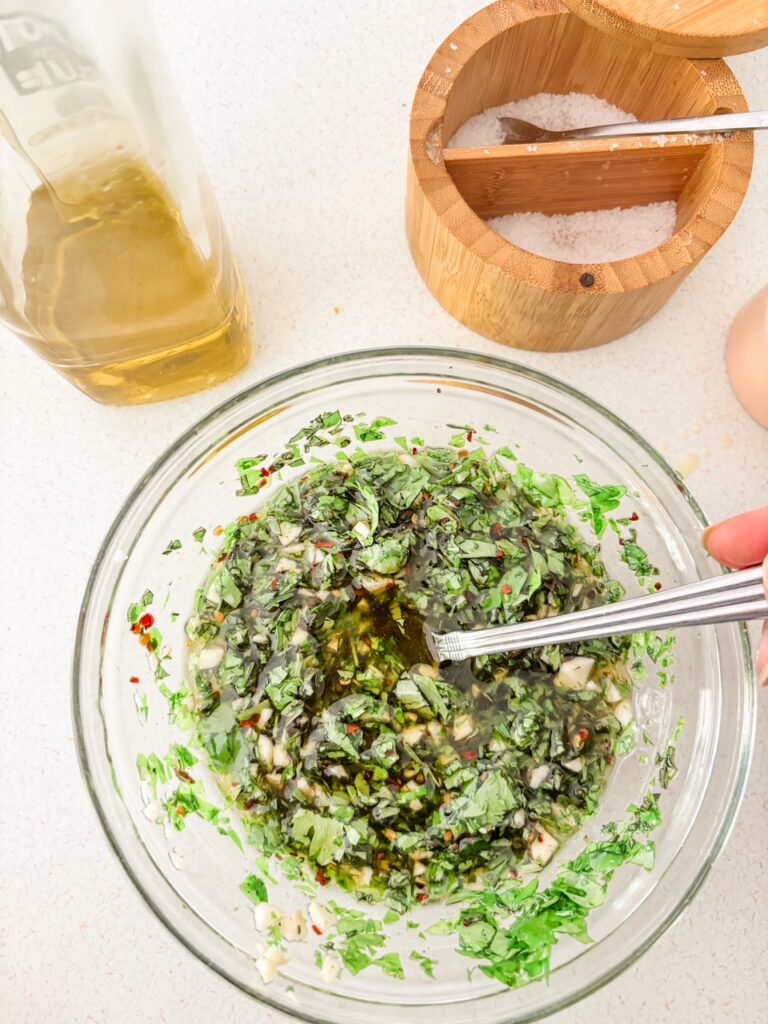
Got parsley? And garlic? Then make some chimichurri sauce! Loaded with fresh herbs and tons of flavor, this gorgeous, zesty sauce is so versatile and so VERY easy to make. A culinary classic!
Summertime Is the Best Time to Make Chimichurri Sauce
My little garden is looking like a backyard jungle these days.
Healthy, burgeoning plants are spilling over the edge of the raised beds. We’re picking a zucchini a day, and sometimes two. The tomato plants have grown as tall as me and are loaded with little green tomatoes, and also some big green tomatoes. It’s providing lots of fodder for my Creamed Kale and Carrot Tops, Zucchini Gazpacho, and Zucchini and Cardamom Bread.
And the herbs? Well, they’re out of control.
We’ve got more thyme, basil, oregano, and parsley than I know what to do with!

But maybe I should say, more oregano and parsley than I’d know what to do with if I didn’t know how to make chimichurri sauce. Fortunately, I do know how to make chimichurri sauce. This is a very good thing because it’s one of the most delicious sauces on the face of the earth.
By the time you’re finished reading this post, you’ll also know how to make this zesty, tasty, all-around terrific herb sauce. But before we get to that part, you might have a couple of questions, starting with…
What Is Chimichurri Sauce?
Chimichurri is an uncooked herb and olive oil-based sauce with lots and lots of fresh minced garlic. Tangy and slightly acidic, it has a bright, zesty, herbaceous flavor.
The gauchos of Argentina and Uruguay invented chimichurri and used it to flavor meat that had been cooked over open campfires. Today, chimichurri is a popular condiment for all sorts of cuisines.
I first encountered it when my family lived in Mexico during the 1990s. It quickly became one of my favorite sauces. Because as you’ll see, it is easy to make and can be used in so many dishes!
What Can You Do With Chimichurri Sauce?
The most common way to use chimichurri is as a marinade or condiment for grilled or roasted meat. Grilled flank steak marinated in chimichurri is something I make a lot during the summer. It would also be good on my tri-tip steak.
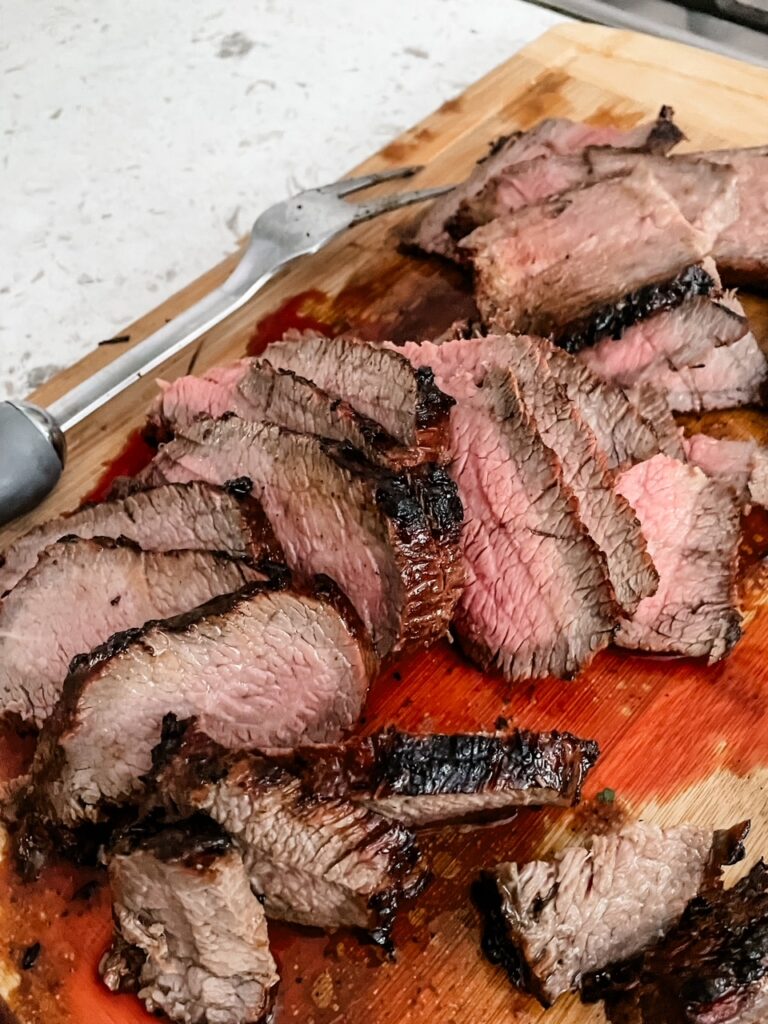
Just place the steak in a plastic zipper, pour in the sauce, and let it sit in the fridge for several hours or overnight. (But not more than twenty-four hours because the acids in the sauce could break down the texture of the meat.) Grill the steak as usual, and top with extra sauce when serving. Delish!
It’s just as terrific when used to marinate chicken, pork, other cuts of beef, and even fish and shellfish. If you’re using it on grilled fish or shrimp, just brush it on a few minutes before cooking.
Chimichurri is a fabulous and versatile condiment.
Add some to a charcuterie board with crusty bread for dipping. Spoon it over oven-roasted potatoes or veggies. Spread it onto steak sandwiches or inside grilled cheese paninis. A little chimichurri is a great addition to tomato soup, minestrone, or a white bean chili.
You can even spoon it over rice or other cooked grains.
Add a dollop of chimichurri to breakfast tacos, the filling of a savory omelet, or plain fried eggs, and you’ll be in breakfast heaven.
Once you start making chimichurri on your own, you’ll find all kinds of uses for it. And now is the ideal time to do it!
Because that freshly grown parsley and oregano that gardens are bursting with in summer make the most flavorful and delicious chimichurri.
Now that you know what chimichurri is and how to use it, let’s talk about what goes into it.
What You Need to Make Chimichurri Sauce
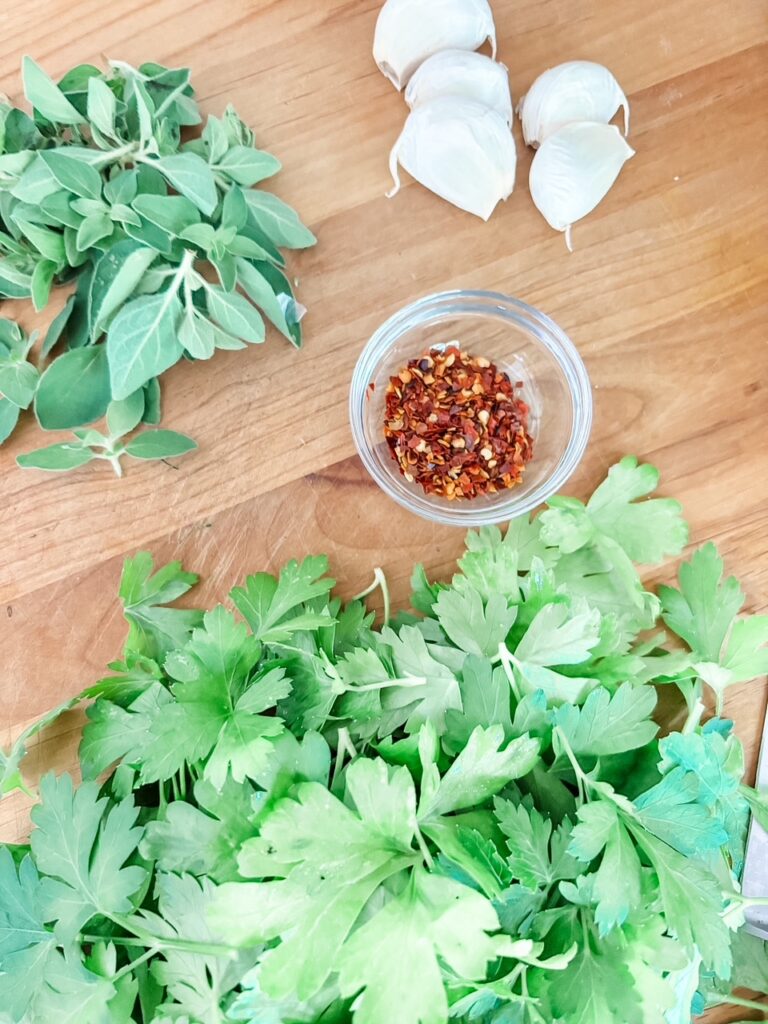
- Parsley – There is no substitute for fresh parsley in the recipe. If you’ve got a lot of parsley growing in your garden as I do, this is a fabulous way to put it to use. But store-bought parsley will also work just fine.
- Oregano – Again, fresh is best! My garden has lots of oregano this time of year, and I love the flavor it adds to chimichurri. However, if you must, you can substitute with dried oregano. Check the amounts in the recipe because you’ll use less dried than fresh.
- Garlic – You need quite a lot for chimichurri, and it should be very finely minced. I like my garlic press as much as the next person, but pressed garlic is not the right move for chimichurri.
- Red pepper flakes – they give the sauce just a little bit of oomph, but not a lot of heat. If you do want more spice, double the amount. If you despise spice, you can leave it out.
- Olive Oil – All olive oils are not created equal! Use a good quality, extra virgin oil.
- Red Wine Vinegar – there really is no sub here. Red wine vinegar has a particular flavor that’s just right for chimichurri and can’t be matched by white or cider vinegar.
- Kosher salt
- Fresh ground pepper
How to Make and Store Chimichurri
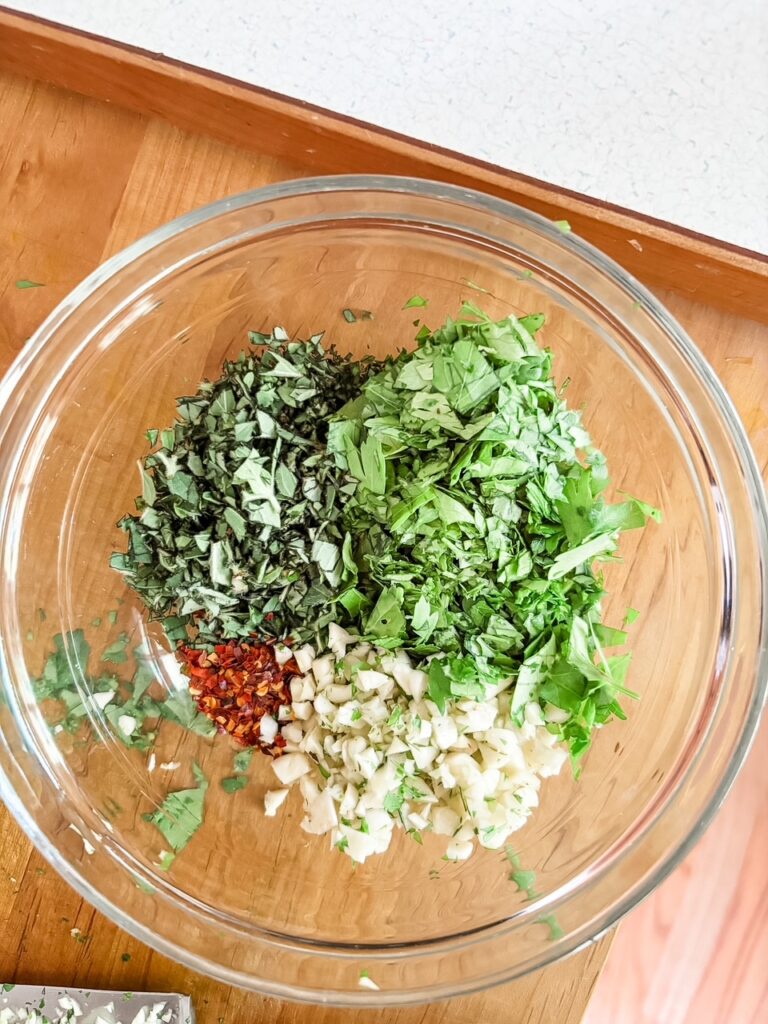
Making chimichurri really could not be easier.
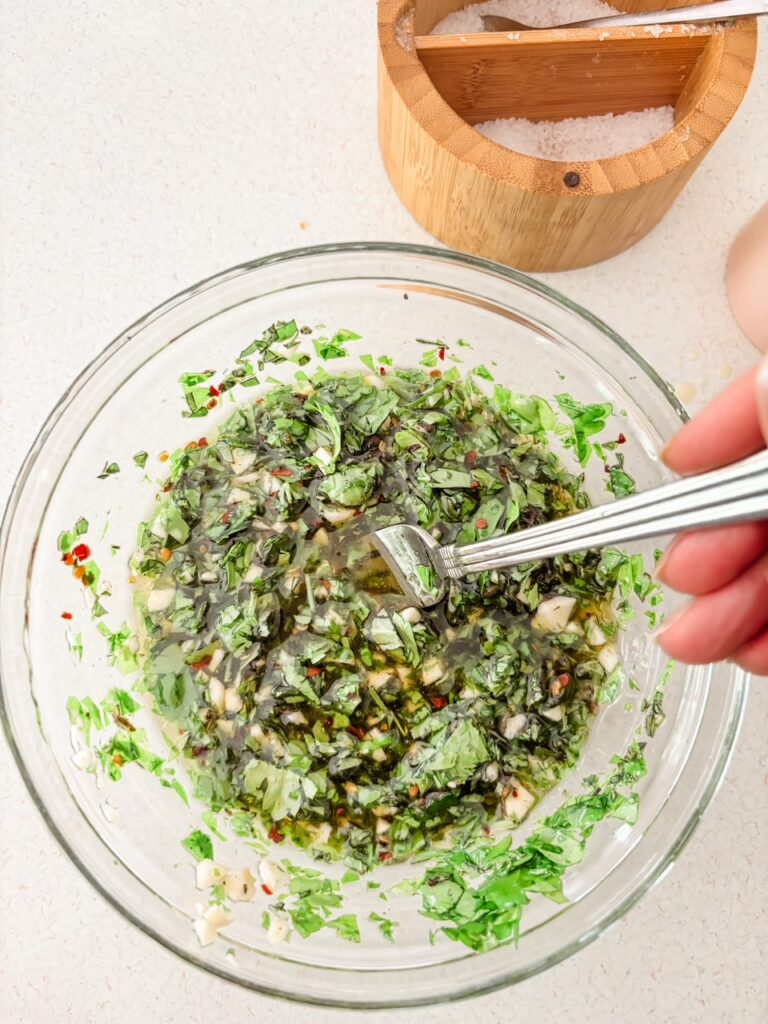
Once you’ve chopped your herbs and minced the garlic, you just stir in the other oil, vinegar, and spices, and you’re done!
I prefer to do my chopping and mincing by hand. However, a food processor will work fine. Just make sure you don’t overprocess the sauce. You want chopped herbs and minced garlic, not pureed.
How to Store and Freeze Chimichurri
Chimichurri can be stored in an airtight container in the fridge for up to a week, preferably with a layer of plastic wrap directly on top. The combination of oxygen and acid can cause oxidation, which can break down the herbs and turn them brown. So, try not to expose it to air for extended periods of time.
Another reason to hand-chop is that it will help prevent discoloration. Larger pieces of herb are less likely to oxidize.
You can also freeze chimichurri for up to three months. The simplest way is to pour it into an ice cube tray. Once it’s frozen solid, pop them out of the tray and store the cubes in a plastic freezer bag.
A final note: it’s normal for oil and herbs to change when refrigerated or frozen. Just let the sauce sit on the counter for a bit with the cover on, so it warms up, then give it a stir before serving.
Print
Easy Chimichurri Sauce Recipe
- Yield: Makes approximately 1 ¼ cups 1x
Ingredients
- 1 bunch parsley, roughly chopped
- 3 T chopped fresh oregano (or 2 tsp dried)
- 4-5 large garlic cloves, minced
- 1 tsp red pepper flakes
- 2/3 cup olive oil
- ¼ cup red wine vinegar
- 1 tsp Kosher salt
- ½ tsp pepper
Instructions
- Chop parsley and oregano. Mince garlic. Mix together in a small bowl.
- Stir in oil, vinegar, red pepper flakes, salt, and pepper into the herb mixture. Serve immediately or store in an airtight container in the refrigerator for up to one week. Can be frozen for up to 3 months. See post for storing and freezing instructions.